
Sliding patio doors, sticking doors & locks
Doors that stick, drag, will not latch, or need a shoulder to close.
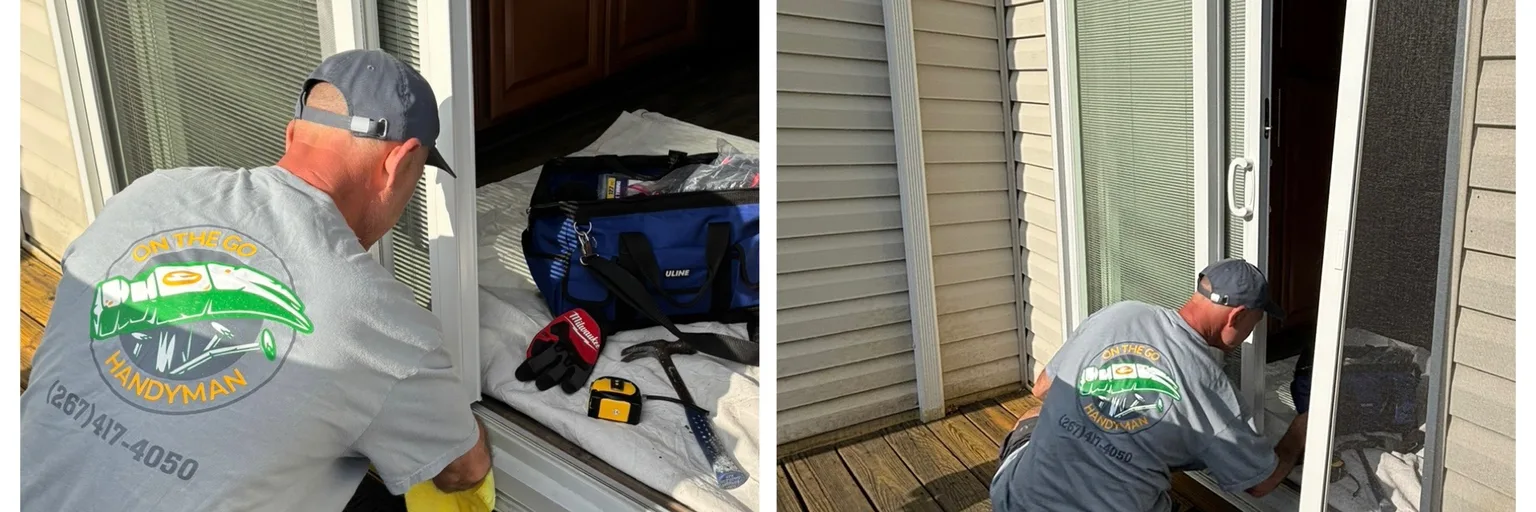
A sliding patio door that takes two hands almost always comes down to the rollers. They are a wear part — they flatten, seize, or come off the track — and the door drags on the frame instead of rolling. Replacing them restores the glide; it rarely needs a new door.
Interior doors that stick usually moved rather than swelled. Hinges loosen, frames settle, and the door catches at the top corner or refuses to latch. Adjusting the hinges or easing the strike plate fixes most of them in one visit.
Locks and deadbolts that bind, stick, or no longer line up get adjusted or replaced, including after a move-in when you would rather not wonder who still has a key.
Sound familiar?
- A patio door that needs both hands, lifts off its track, or grinds when it moves
- A door that will not latch without a push, or swings open on its own
- A deadbolt that needs jiggling, or a key that catches
- Visible gaps at the top or bottom of a closed door
- New keys wanted after moving in
How it works
Call or text what needs fixing. A photo helps — it shows the job, the materials and the access before anyone comes out.
Eugene explains what he can do and what it will cost before the work starts. If anything changes, you hear it first — no surprise charges.
The work gets done properly, the area is protected, and the space is left tidy. If a job needs an electrician or a plumber, you are told rather than worked around.
What affects the cost
Door work is quoted once the problem is identified — the same symptom has cheap and expensive causes.
- Rollers, hinges, strike plate or the full hardware set
- Whether the door itself is sound or has taken damage
- Patio door size and weight — a large slider is a two-person lift
- Lock grade, and whether keying needs to match existing doors
Other things I do
Ready for a free estimate?
Tell us about your project — we'll get back to you by phone or email.